

Spanish Translation
Certified Spanish
Translation Services
Written Spanish translation for law firms, hospitals and employers, from English into Spanish and from Spanish into English. Exhibits, contracts, medical records and client notices, in the Spanish variant your reader uses, with a signed certificate of accuracy.
Which kind of Spanish should a certified translation use?
It should match the reader. Mexican, Central American, Caribbean and peninsular Spanish share a grammar but differ in everyday and legal vocabulary, so a document for a known audience is translated into that audience's variant, and a document for readers from many countries is written in a neutral Spanish. Kaplan Interpreting Services confirms the variant and the direction before translating, keeps both surnames on Spanish names consistent across a matter, assigns native writers of the target language, and delivers each certified file with a signed certificate of accuracy naming the translator.

Spanish Translation
English into Spanish for Clients, Patients and Staff
Engagement letters, client notices, settlement correspondence, HR handbooks, safety policies, consent forms and discharge instructions written in English and needed in Spanish. The reader is a person who has to act on the text, so we write it at the reading level of the audience and in the variant they actually speak, rather than in the register of the English draft.
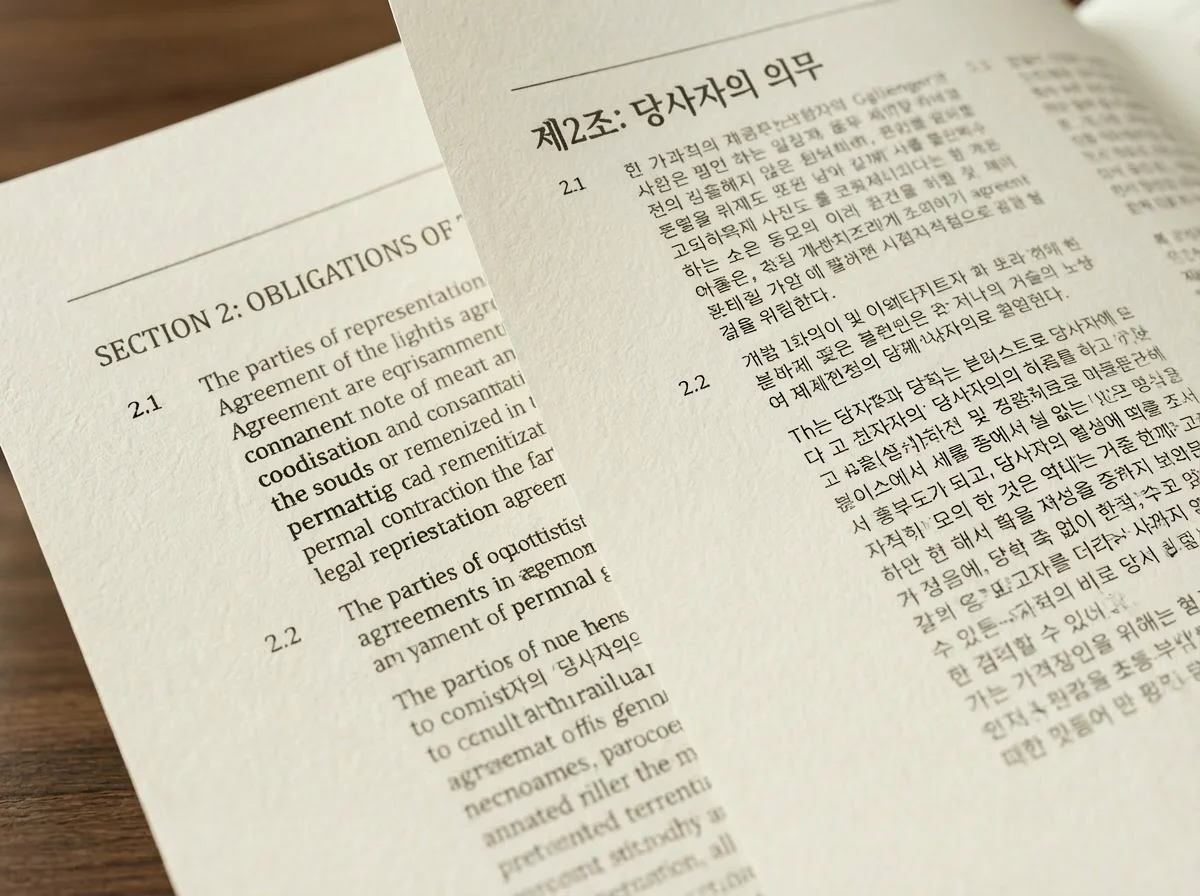
Spanish Translation
Spanish into English for Evidence and Records
Records issued in Mexico, Central America, South America, the Caribbean and Spain: notarial deeds, corporate minutes, court rulings, police reports, payroll records and correspondence that a case or a claim depends on. Seals, marginal notes and handwritten entries are rendered too, and anything illegible is marked as illegible instead of guessed. Records in other languages are covered on our certified document translation hub.

Spanish Translation
Exhibits, Discovery and Text Messages
Emails, WhatsApp chats, voicemail transcripts and workplace messages produced in Spanish. Informal writing is where meaning hides: slang, regional words, missing accents and phonetic spelling. Our translators keep the tone of the original and add a bracketed translator's note where a word could carry two readings, so counsel sees the ambiguity instead of a confident guess. Why none of this is left to software is covered in our article on machine translation and legal documents.

Spanish Translation
Medical Records in Both Directions
Clinical notes, imaging reports and pharmacy records from hospitals in Mexico and Latin America, translated into English for injury and disability matters, and patient-facing material translated into Spanish for providers. Abbreviations used in Spanish-language charts are expanded rather than transliterated, because an abbreviation that is obvious in Guadalajara means nothing to a reviewer in Los Angeles.
Why Kaplan
What Changes When the Language Is Spanish
The Variant Is Chosen, Not Assumed
Before a word is translated we ask who will read it. A notice for a Los Angeles workforce, a contract for a counterparty in Madrid and a letter to a family in Puerto Rico are three different Spanish texts.
Both Surnames, Every Time
Spanish names usually carry a paternal and a maternal surname. We keep both, in the order the source uses, and hold that spelling across every document in the matter.
Native Writers for the Target Language
English into Spanish goes to native Spanish writers and Spanish into English goes to native English writers, with a bilingual reviewer checking each against the source.
Legal and Clinical Vocabulary
Concepts such as amparo, poder notarial or finiquito have no one-word English match. Translators who work in law and medicine render the concept and keep the original term where a reader needs it.
Signed Certificate of Accuracy
A certified Spanish file ends with a certificate of accuracy, signed by the translator who did the work and laid out for the court, carrier or agency that will read it.
A Delivery Date Agreed Up Front
Volume is counted from the actual files, and the delivery date we give is planned backward from your filing, hearing or rollout.
FAQs
Common Questions
Which Spanish will the translation use: Mexican, Central American, Caribbean or Spain?
+
The one your reader speaks. For a known audience we translate into that variant: Mexican Spanish for a workforce or patient group from Mexico, Salvadoran or Guatemalan usage where that is the community, Caribbean usage for Puerto Rico, Cuba or the Dominican Republic, and peninsular Spanish for Spain. When one document has to serve readers from many countries, such as a company-wide policy, we write a neutral Spanish that avoids words that change meaning from one country to the next. Name the audience and the variant is agreed with you in advance.
Do you translate from English into Spanish as well as from Spanish into English?
+
Yes, and they are staffed differently. English into Spanish covers what you send out: notices, agreements, handbooks and patient materials. Spanish into English covers what comes in: evidence, records and correspondence. Each direction is written by a translator whose native language is the target, then checked by a bilingual reviewer. When the English version is going to be filed, the same certificate of accuracy is used that our certified legal translation service describes.
How do you handle names with two surnames on records from Mexico and Latin America?
+
We keep both surnames in the order the record uses, with accents and the letter ñ intact, and we hold that one spelling across every exhibit, record and letter in the matter. If a client already uses a shortened or anglicized name in the United States, we note it alongside the full form rather than replacing it, so the documents still match each other. Arizona firms working with records from Sonora can find the same approach on our Phoenix document translation page.
Can you translate Spanish text messages and chats for discovery?
+
Yes. Messages are translated as written, informal tone included, and laid out so each message keeps its sender, date and time. Where a slang term or a misspelled word could mean two things, a bracketed translator's note gives both readings rather than choosing one silently. That matters most when the meaning of a single message is in dispute.
Can Spanish-language hospital records from Mexico be translated for an injury case?
+
Yes. Records from hospitals and clinics in Mexico and Latin America are translated into English with abbreviations expanded, drug names checked against their English equivalents and lab values carried over exactly. For records in any language, see certified medical translation, and our note on what counsel should verify in translated medical records lists what to check on delivery.
Our client negotiated an agreement in Spanish. Should the contract be translated?
+
Whether a Spanish version is owed is a question for counsel, and our article on California Civil Code 1632 and contracts negotiated in Spanish is a good place to start. When a translation is needed, we render the agreement as drafted, without advising on its terms, and where both language versions will be signed we point out any clause whose Spanish wording reads more broadly or more narrowly than the English.
Who handles spoken Spanish at a deposition or hearing?
+
Yes, as a separate service. Translation is written; interpreting is spoken, for depositions, hearings, mediations and medical appointments. Our Spanish interpreters page covers that service, and Los Angeles litigation teams book through court-certified Spanish interpreters in Los Angeles. When one matter uses both, the interpreter can be given the translated exhibits beforehand.
How do you price a certified Spanish translation?
+
We price it per document, and only after reading the files. Send them through our request form, or call (833) 547-7770, and tell us the direction, the reader or receiving body and the deadline. Nothing is translated until you have the Spanish variant, the certification format, the delivery date and the price from us in writing.
Related Spanish and Translation Services
Spanish matters often need both the documents and the spoken record handled. These pages cover each one.
Request a Certified Spanish Translation Quote
Send the documents and tell us who will read them. We confirm the Spanish variant, the certification format and a delivery date before work begins.