
Certified Legal Translation
Certified Legal
Translation
Certified translation of court filings, discovery, evidence, and contracts for law firms and corporate legal departments, delivered with a signed certificate of accuracy and a case glossary that keeps every defined term consistent across the record.
What is certified legal translation, and when do you need it?
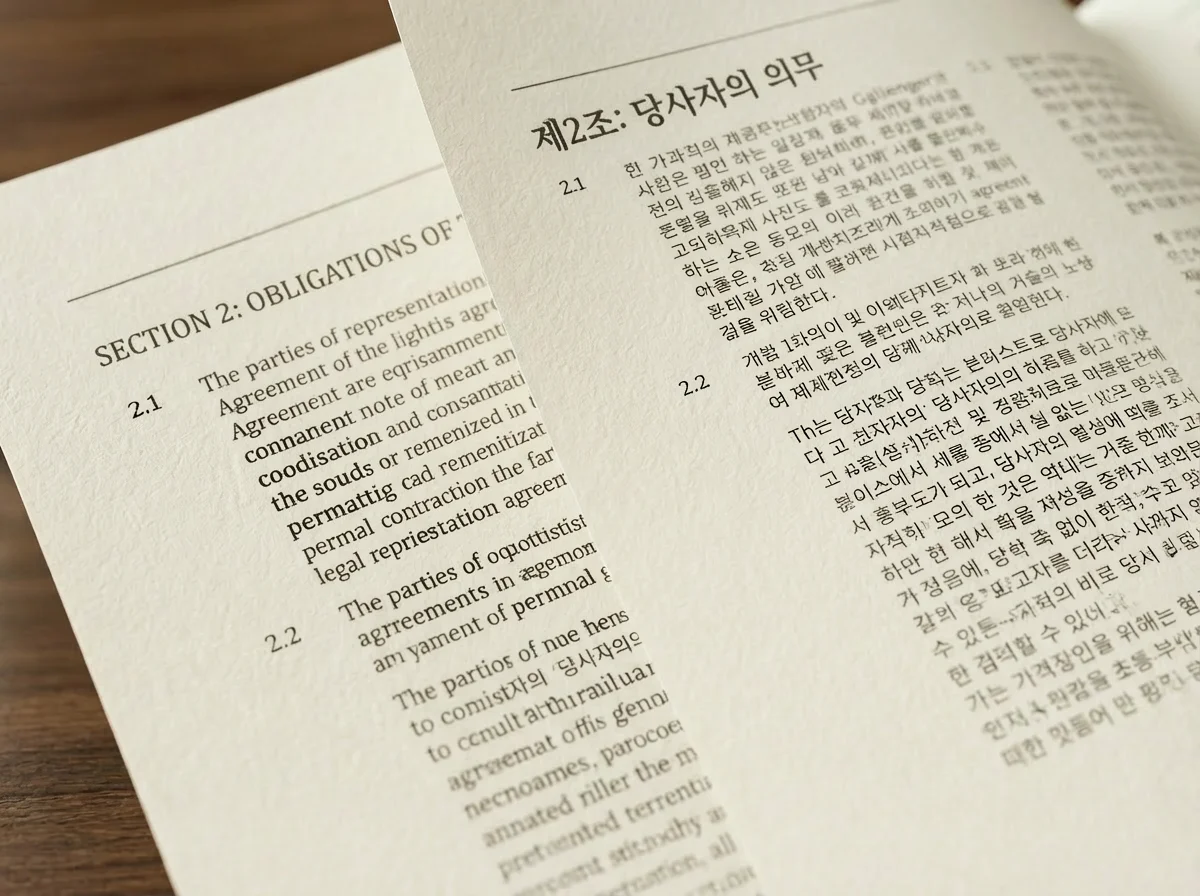
Certified legal translation is a complete translation of a legal document paired with a signed certificate of accuracy from the translator. Courts, opposing counsel, and government agencies require it before a foreign-language document can enter the record. Kaplan assigns translators who work in law, builds a case glossary so defined terms stay consistent across an entire production, and delivers certified translations in 200+ languages, with notarization or an apostille-ready package when the receiving body requires it.
Legal Translation
Court Filings & Evidentiary Documents
Certified translation of pleadings, exhibits, contracts in dispute, and documentary evidence, prepared so opposing counsel and the court accept the record without a challenge to the translation itself. Each file is delivered with a signed certificate of accuracy naming the translator.

Legal Translation
Discovery & Document Review
High-volume translation for discovery productions, including correspondence, internal records, and foreign-language document sets. We build a case glossary before the first file so party names, defined terms, and technical vocabulary stay identical across thousands of pages.

Legal Translation
Corporate & Transactional Legal
Translation of agreements, corporate governance records, compliance filings, and due-diligence materials for cross-border transactions. Defined terms are carried consistently from the term sheet through the executed agreement so the parties are reading the same deal.

Legal Translation
Sworn, Notarized & Apostille-Ready
Certified translations formatted for the body that will receive them, whether that is a state court, a federal court, a foreign ministry, or a consulate. Tell us the destination and we prepare the certification, notarization, or apostille-ready package to match its requirements.
Why Kaplan
Built for the Evidentiary Record
Legal Translators, Not Generalists
Legal documents are assigned to translators who work in law, so procedural terms of art are rendered as terms of art rather than paraphrased into something a court will question.
Signed Certificate of Accuracy
Every certified legal translation is delivered with a signed certificate naming the translator and attesting to completeness and accuracy, which is what courts and agencies actually require.
Case Glossaries Built First
Party names, defined terms, and disputed vocabulary are fixed in a glossary before translation begins, so a term does not shift meaning between exhibit 4 and exhibit 400.
Confidentiality and NDAs
Privileged and sensitive matters are handled under strict confidentiality with signed NDAs available, and documents are seen only by the assigned linguists and project team.
Deadline-Aware Scheduling
We plan backward from your filing date or hearing date and confirm a realistic timeline before work begins, including same-week availability for many language pairs.
200+ Languages
Certified legal translation in over 200 languages and dialects, including the rare pairs that surface in cross-border litigation and international arbitration.
Client Feedback
What Our Clients Say
"They built a glossary before touching the production, so the same defined term read the same way across every exhibit. That saved us an argument we did not want to have."
Daniel R.
Litigation Partner
"The certificate of accuracy was exactly what the court wanted, first time. No re-filing, no questions from the clerk."
Priya S.
Paralegal Manager
FAQs
Common Questions
What makes a legal translation certified?
+
A certified legal translation is a complete rendering of the source document paired with a signed certificate of accuracy in which the translator attests that the translation is true and complete. Courts, opposing counsel, and government agencies rely on that certificate to accept the document into the record. Certification is about the attestation and the translator's accountability, not about a government licence, which is why the certificate must name the translator and be signed.
Will courts and opposing counsel accept your certified legal translations?
+
Yes. Our certified legal translations are prepared for evidentiary use, delivered with a signed certificate of accuracy, and formatted for the receiving body, whether that is a state court, a federal court, an arbitral tribunal, or a foreign authority. If a matter later requires it, we can provide independent review or back-translation so the rendering can be verified against the source on the record.
How do you keep terminology consistent across a large discovery production?
+
We build a case glossary before the first document is translated, fixing party names, defined terms, and any disputed vocabulary. Every linguist on the matter works from that glossary, and it is updated as the case develops. This is the single biggest source of translation challenges in large productions, because an inconsistent term across two exhibits invites an argument about the record rather than the merits.
Can you handle a filing deadline or an expedited production?
+
Often, yes. Turnaround depends on volume, language pair, and how much of the material is technical, and we plan backward from your deadline from the first conversation. Many matters are completed with same-week availability, and larger productions are scheduled in tranches so review can begin before the full set is finished. Share the deadline when you send documents and we confirm a realistic timeline before starting.
Do you provide notarized or apostille-ready legal translations?
+
Yes. We deliver certified translations with a signed certificate of accuracy and can arrange notarization or an apostille-ready package when the destination requires it, including consular and foreign-ministry formats. Tell us which body will receive the document and we prepare the certification to that body's requirements rather than a generic format.
Is my privileged material kept confidential?
+
Yes. Legal matters are handled under strict confidentiality with signed NDAs available, and files are accessible only to the assigned linguists and the project team. We do not use client documents to train machine systems, and we do not retain material beyond the period you specify.
Do you use machine translation for legal documents?
+
No. Certified legal translation is done by human legal translators, then reviewed. Machine output cannot carry a certificate of accuracy, and it fails in exactly the places that matter in litigation: terms of art, negation, conditional obligations, and defined terms. Where a client wants machine output for internal triage before deciding what to certify, we will say so plainly and price the two steps separately.
Do you translate patents and intellectual property filings?
+
Patent and IP work has its own requirements around claim scope, prosecution, and filing formats, so it is handled separately. See our certified patent translation service for USPTO, PCT, and national-phase filings, prior art, and office actions.
Do you also provide interpreters for depositions and hearings?
+
Yes. Translation covers documents; interpreting covers the spoken word. For sworn testimony, hearings, and client meetings, see our deposition interpreters and legal interpreters. Many firms use both on the same matter, and pairing them keeps terminology consistent between the documents and the record.
How do I request a certified legal translation quote?
+
Send the documents, the target languages, and the deadline through our online form or by phone at (833) 547-7770. We confirm scope, certification format, and turnaround, and provide a fixed quote before any work begins.
Related Legal Language Services
Documents and testimony travel together on most matters. Pairing certified translation with the interpreters on the same case keeps terminology consistent between the exhibits and the record.
Request a Certified Legal Translation Quote
Send your documents and deadline. We confirm scope, certification format, and a fixed quote before work begins.