
Mandarin Translation
Certified Mandarin
Document Translation
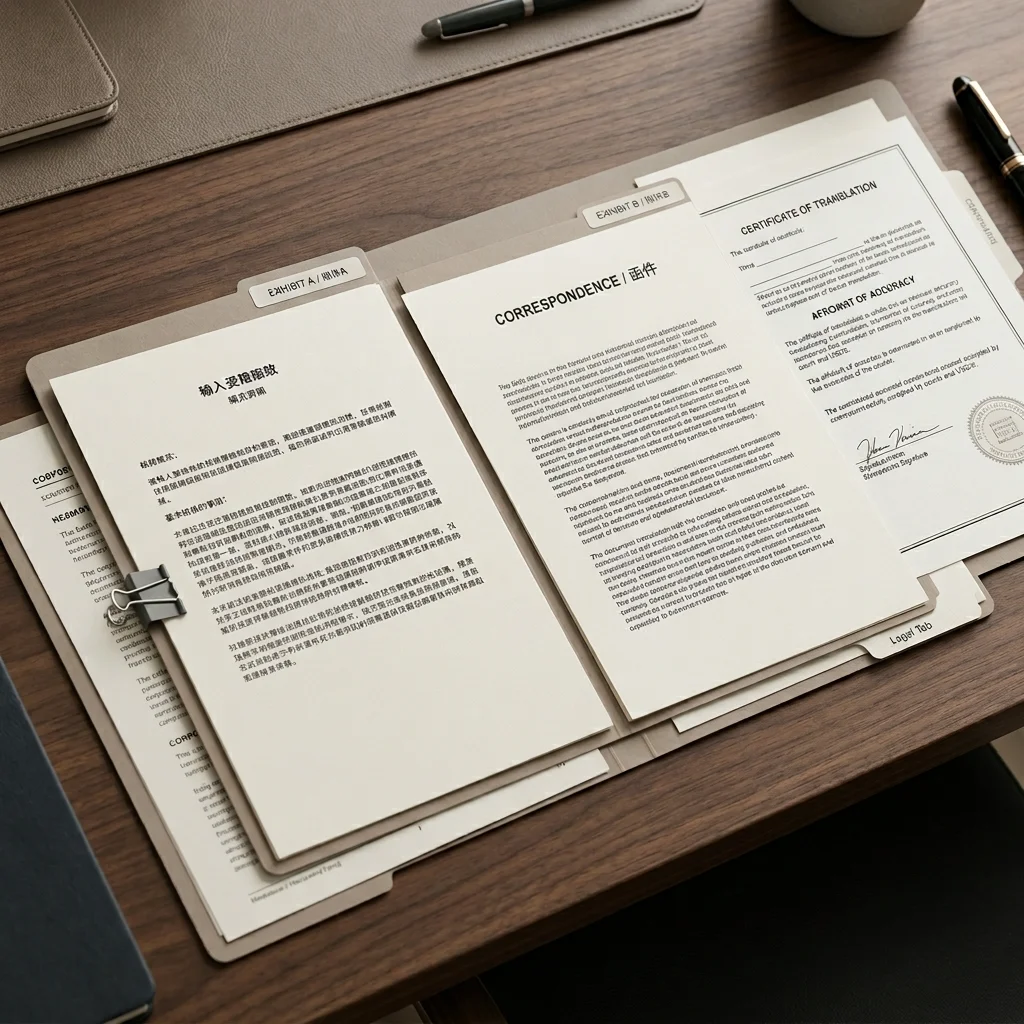
Certified Chinese document translation for commercial contracts, technical and manufacturing documentation, and civil records, with the Simplified or Traditional character set confirmed against the destination before any work begins.
Does certified Mandarin translation use Simplified or Traditional characters?
It depends on the destination, and it is the first question on any Chinese project. Simplified characters are used in mainland China and Singapore. Traditional characters are used in Taiwan, Hong Kong, and Macau. The two are not interchangeable, and a Traditional-reading recipient treats a Simplified file as incorrect. Kaplan confirms the character set and region before translating, reproduces registered company names rather than translating them freely, holds personal-name transliteration to one convention across a document set, and delivers a signed certificate of accuracy for courts, agencies, and universities.
Mandarin Translation
Simplified & Traditional Character Sets
Translation into the character set the destination actually uses: Simplified for mainland China and Singapore, Traditional for Taiwan, Hong Kong, and Macau. This is the first question on any Chinese project and the most common reason a delivered file is rejected, so it is confirmed with you before work begins rather than assumed from the language name.

Mandarin Translation
Commercial Contracts & Corporate Filings
Translation of supply agreements, joint venture documents, corporate registrations, and board material for China-facing and Taiwan-facing transactions. Entity names and chops are reproduced as they appear on the registration rather than translated freely, because a counterparty verifies the registered name and not a reasonable rendering of it.

Mandarin Translation
Technical, Manufacturing & IP Documentation
Translation of specifications, quality documentation, and technical correspondence for manufacturing and technology work, which is where the largest real Chinese-language volume sits. Where the destination is a patent filing, the work moves to our patent track, because claim scope rather than readability governs the wording there.
Mandarin Translation
Personal & Civil Records
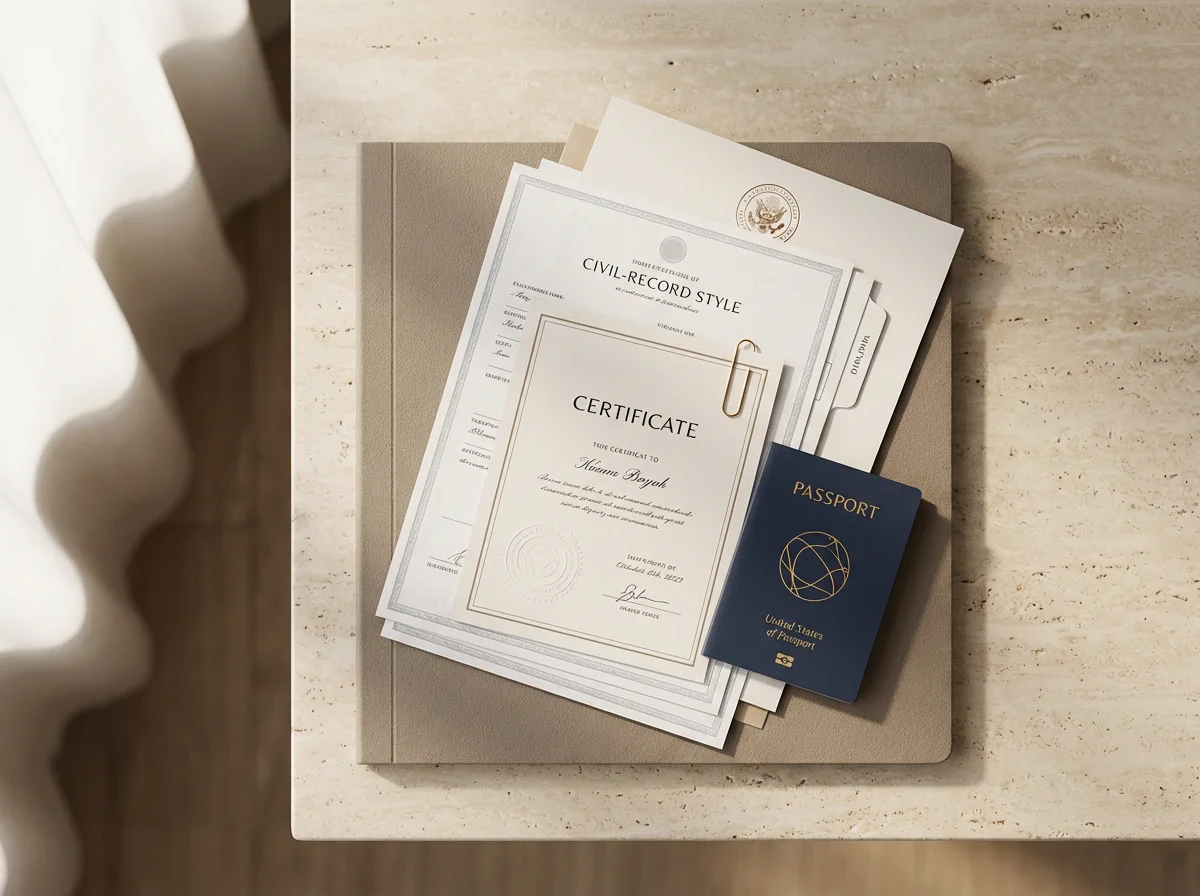
Translation and certification of household registers, birth and marriage records, academic transcripts, and notarial certificates issued in Chinese. Name order and transliteration are handled deliberately and matched across a document set, because an applicant whose name is rendered two ways across a filing creates a question nobody wants to answer later.
Why Kaplan
Built for Chinese-Language Accuracy
Character Set Confirmed First
Simplified and Traditional are not interchangeable and a reader in Taipei does not accept a Simplified file. We confirm the destination before translating, which is the single most common failure point on Chinese projects.
Registered Names Reproduced, Not Translated
Company names, chops, and official entity designations are reproduced as registered. A freely translated company name cannot be verified against a register, which is exactly what a counterparty or an agency will try to do.
Transliteration Held Consistent
Personal and place names are transliterated to one convention and held across the whole set, including name order. Two renderings of one name inside a filing is a discrepancy a reviewer has to resolve.
Written Chinese, Read Correctly
Cantonese and Mandarin speakers share written Chinese, so a document question and a spoken-language question have different answers. We ask which is actually needed rather than assuming from the language you named.
Signed Certificate of Accuracy
Certified Chinese translations are delivered with a signed certificate naming the translator, and Kaplan formats it for the court, agency, or university that will receive the document.
Subject-Matter Assignment
Technical, commercial, and civil documents are assigned to linguists with the matching background, because Chinese technical registers and legal registers are genuinely different vocabularies.
Client Feedback
What Our Clients Say
"They asked whether it was going to Taipei or Shanghai before they quoted. Our last vendor sent Simplified to Taiwan and we had to start again."
Lauren S.
Corporate Counsel
"The registered entity name came back exactly as it appears on the registration, with a translation alongside it. That is what our filing needed."
Daniel W.
Cross-Border Transactions Partner
FAQs
Common Questions
Do I need Simplified or Traditional Chinese?
+
It depends entirely on the destination. Simplified is used in mainland China and Singapore. Traditional is used in Taiwan, Hong Kong, and Macau. They are not interchangeable, and a Traditional-reading recipient will treat a Simplified file as wrong. Tell us where the document is going and we confirm the character set before translating rather than guessing from the word Mandarin.
Is Mandarin translation different from Cantonese translation?
+
For documents, largely no, and that surprises people. Cantonese and Mandarin speakers share written Chinese, so a document question is answered by character set and region rather than by spoken language. Where it matters is Hong Kong usage and some vocabulary. For the spoken side, see Cantonese, which is a genuinely separate language in a room.
What makes a Chinese translation certified?
+
A complete translation accompanied by a signed certificate of accuracy from the translator. Courts, USCIS, universities, and agencies rely on that certificate before accepting a Chinese-language document. The certificate names the translator and attests to completeness, which is why machine output cannot substitute for it regardless of how fluent it reads.
How do you handle company names and chops?
+
Registered entity names are reproduced as registered, with a translation offered alongside rather than in place of them. Chops and seals are described and their text rendered. A counterparty or a registry will try to match the name against a record, and a freely translated name cannot be matched.
How are personal names transliterated?
+
To one convention, held across the entire set, with name order stated explicitly. Chinese name order places the family name first, and a filing that renders one person two ways creates a discrepancy a reviewer has to resolve. Where a client has an established English spelling already in use, we adopt it rather than imposing a system.
What if the document is going into a patent filing?
+
Then it belongs on the patent track. Chinese specifications, prior art, and claim language destined for a USPTO or PCT filing are handled by our certified patent translation service, where claim scope rather than readability governs the wording.
What if it is going to a court?
+
Then it goes on the legal track. Documents destined for a docket or an evidentiary record are handled by our certified legal translation service, which builds a case glossary and certifies for the court rather than for a general recipient.
Do you also provide Mandarin interpreters?
+
Yes, and that is the spoken service. Documents are translation, a deposition or appointment is interpreting. See Mandarin interpreters for the spoken side and Mandarin language background for how the language behaves on a record. Pairing them is common on cross-border matters.
How do I request a certified Chinese translation quote?
+
Send the documents, the destination region, and the body that will receive them through our online form or by phone at (833) 547-7770. We confirm character set, certification format, and turnaround, and provide a fixed quote before work begins.
Related Chinese Language Services
Documents and the spoken record are different jobs. A deposition, a plant visit, or a negotiation needs an interpreter, and an interpreter who has read the translated file arrives already holding the terminology.
Request a Certified Mandarin Translation Quote
Send your documents and tell us the destination region. We confirm character set, certification format, and turnaround before work begins.