
Japanese Translation
Certified Japanese
to English Translation
Certified Japanese to English translation for company records, court exhibits, koseki family registers and medical records, with each seal shown where it sits, era dates converted to the Western calendar, and names spelled the way the passport spells them.
What is certified Japanese to English translation?
Certified Japanese to English translation is a complete English translation of a Japanese-language document paired with a signed certificate of accuracy naming the translator, formatted for the court, agency, insurer or employer that will receive it. Japanese documents need three things a plain rendering drops. First, the seal: most Japanese documents are executed with a registered hanko seal rather than a signature, so the translation marks each seal where it appears. Second, the date: official records date by imperial era (Showa, Heisei, Reiwa), so every date is converted to the Western calendar with the original kept beside it. Third, the name: one kanji can be read several ways, so the romanised spelling comes from the passport, not from the characters.

Japanese Translation
Corporate and Commercial Records
Company registry certificates (tokibo tohon), board minutes, articles of incorporation, financial statements and the commercial agreements that sit behind a Japanese parent, a U.S. subsidiary or a distribution relationship. Seal impressions are marked where they appear, and the company name is rendered the way the entity itself uses it in English. Agreements as a document type are covered on our contract translation page.

Japanese Translation
Court Filings and Exhibits
Japanese-language exhibits, correspondence, declarations and foreign judgments translated into English for a U.S. proceeding, with a signed certificate of accuracy naming the translator. Defined terms and party names are fixed once and held across the production, so the exhibit binder and the deposition transcript use the same words.

Japanese Translation
Family Register and Civil Records
Koseki family register extracts, resident records (juminhyo), birth, marriage and death certificates, and the seal registration certificate (inkan shomeisho) that often travels with them. Era dates are converted to the Western calendar and the original era date is kept beside it, so a reviewer can check the conversion without a reference table.

Japanese Translation
Medical and Employment Records
Hospital records, physician reports and treatment histories for an injury claim or an insurance file, and employment records, pay statements and certificates of employment for a hiring or benefits question. Clinical material is checked against the source by a second linguist before the certificate is signed.
Why Kaplan
Built for Japanese Document Accuracy
Seals Shown Where They Sit
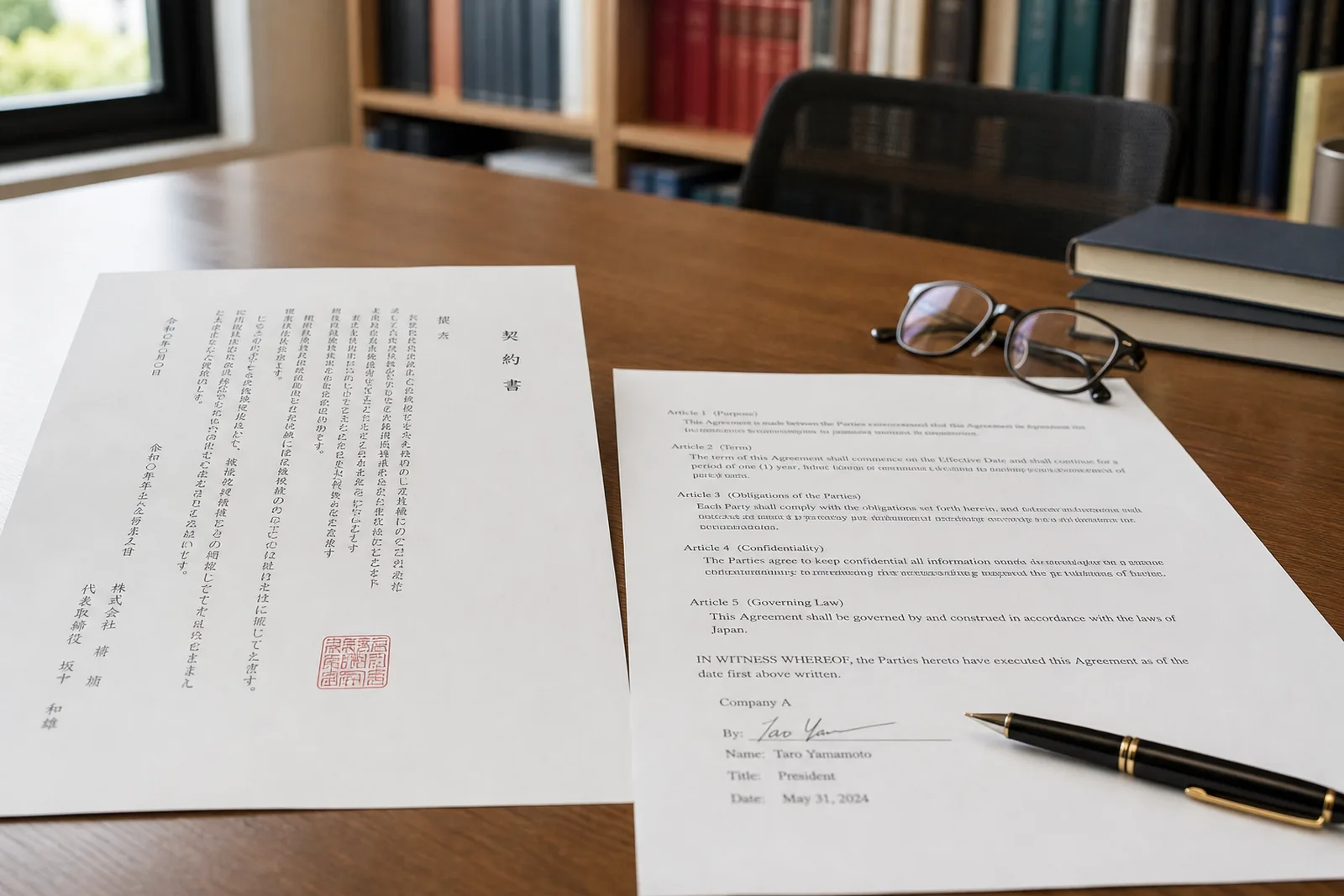
A Japanese document is usually executed with a registered seal rather than a signature. The translation marks each seal impression in place and identifies whose seal it is, so the English reader can see that the document was executed and by whom, which a bare translation of the text alone does not show.
Era Dates Converted Correctly
Japanese official records date by imperial era: Showa, Heisei and Reiwa. Each date is converted to the Western calendar and the original is kept alongside it. An era year read one off is a small mistake that makes a birth date, a registration date or a contract date wrong in every document that repeats it.
Names From the Passport, Not the Kanji
The same kanji can be read more than one way, so a name cannot be romanised from the characters alone. We take the spelling from the passport or from the person, confirm it with you, and hold it across every document in the set.
Certified for the Body That Receives It
Every translation carries a signed certificate of accuracy naming the translator, formatted for the court, agency, insurer or employer that will receive it. Tell us the receiving body when you send the files, and we confirm the certification format before work begins.
FAQs
Common Questions
What is certified Japanese to English translation?
+
It is a complete English translation of a Japanese-language document paired with a signed certificate of accuracy naming the translator, formatted for the body that will receive it. For Japanese the translation also has to carry three things a plain rendering of the text drops: where each seal sits, the era dates converted to the Western calendar, and the romanised names taken from the passport rather than guessed from the kanji.
Can you translate a koseki family register?
+
Yes. Koseki extracts, both the full copy (tohon) and the partial copy (shohon), are among the Japanese civil records we translate most often, together with the resident record (juminhyo). Tell us which one you have and what it is for, because the full and partial copies carry different entries and the receiving body may expect one rather than the other.
How do you handle hanko seals on a Japanese document?
+
Each seal impression is marked in the translation where it appears, with a note identifying whose seal it is when the document makes that clear. If the file includes a seal registration certificate (inkan shomeisho), we translate it as well, because it is the document that ties the seal to the person or company.
Do you translate Japanese contracts and agreements?
+
Yes. Japanese agreements raise two issues of their own: execution by seal, and a governing-language clause that decides which version controls when the Japanese and English texts differ. Our contract translation page covers how we handle agreements as a document type, in Japanese and every other language.
Is certified Japanese translation the same as hiring a Japanese interpreter?
+
No. Translation is written, interpreting is spoken. A record, an exhibit or a company certificate needs a translator and a certificate of accuracy. A deposition, a hearing or a meeting needs an interpreter. See our Japanese interpreters page for the spoken side, and our Japanese legal interpreters in Los Angeles for depositions and hearings there.
Do you translate Japanese medical records for an injury claim?
+
Yes. Hospital records, physician reports and treatment histories, translated for the adjuster, the attorney or the reviewing physician who will read them. For the clinical discipline itself see certified medical translation.
Do you translate English documents into Japanese as well?
+
Yes. Most of the work runs Japanese to English, but we translate into Japanese for notices, agreements, policies and correspondence that a Japanese reader has to understand, with the register matched to the reader: a letter to a Japanese parent company reads differently from a notice to an employee.
How do I request a certified Japanese translation quote?
+
Send the documents, the direction of translation and the body that will receive them through our online form or by phone at (833) 547-7770. We confirm the certification format, the name spellings to use and a fixed quote before work begins.
Related Japanese Language Services
Written records and spoken proceedings are separate jobs. When the same matter needs both, the interpreter can read the translated exhibits beforehand, so the same terms are used on the record and in the binder.
Request a Certified Japanese Translation Quote
Send your documents and tell us who receives them. We confirm the certification format and the name spellings before work begins.