
Phone, Video, or In Person: How to Figure Out Which Interpreter You Need
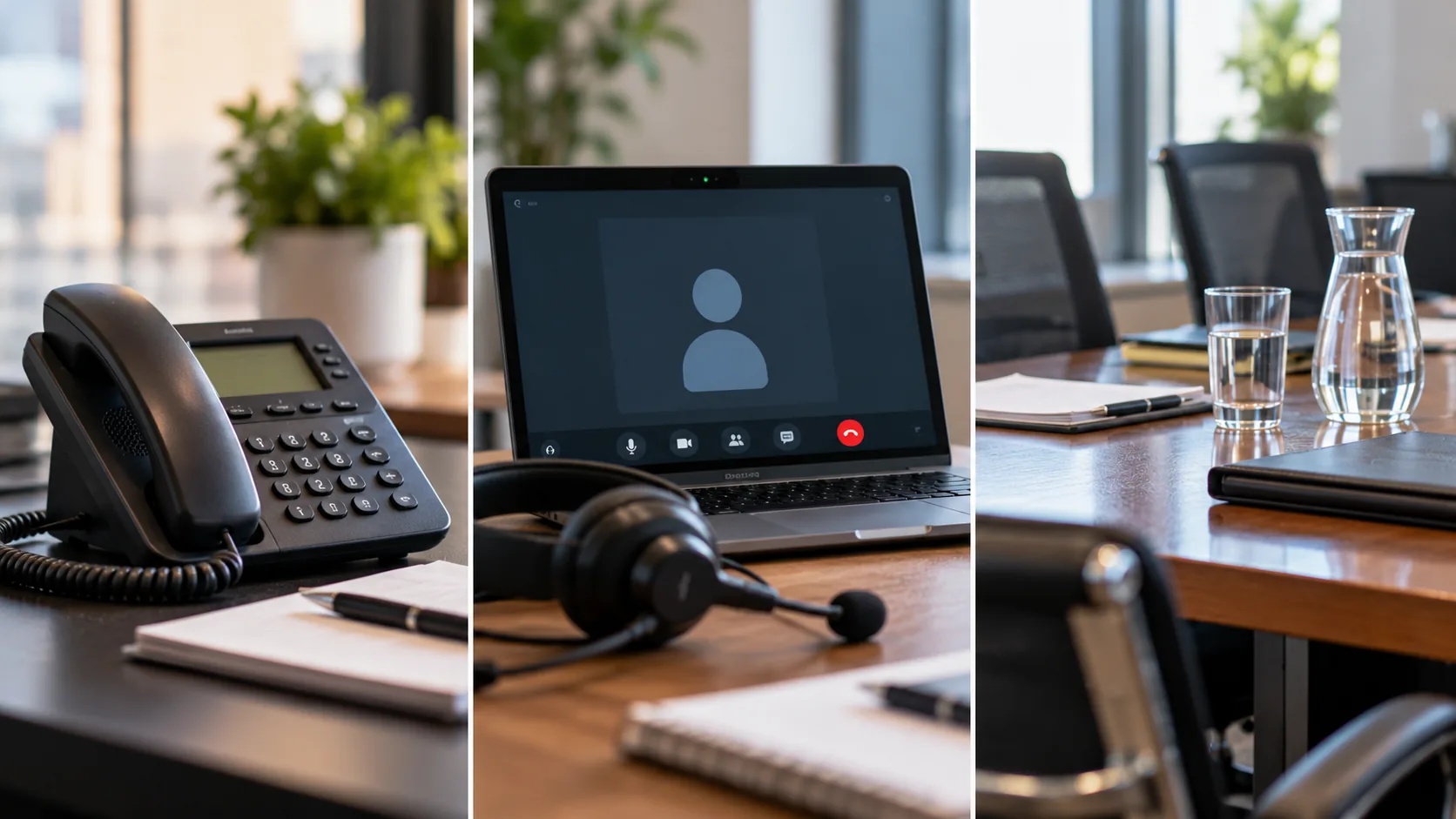
Choosing between phone, video, and in-person interpreting is not only a matter of cost and convenience. Courts, health care interpreting groups, and the national association of sign language interpreters have published guidance on which format fits which conversation. This article works through it starting with the cases that call for an interpreter in the room, then moves down to when video is enough and when a phone call is enough.
The starting point is simple. An interpreter never needs to be a richer format than the conversation itself. A phone call is fine with a phone interpreter, and a Zoom meeting is fine with a video interpreter. The real question is how much you can scale back from an in-person conversation.
When You Need an Interpreter in the Room
In person is the safest choice, and in these situations the guidance favors it.
A difficult medical conversation. When a medical provider is delivering bad news or a serious diagnosis, or holding a psychiatric or mental health appointment, an in-person interpreter is preferred and video may not work well. Source: San Francisco General Hospital’s practice, as described in the NCIHC open call summary (2007); RID, Video Remote Interpreting Standard Practice Paper (2010), medical and mental health sections.
The first meeting. An onsite interpreter is recommended for a first attorney-client meeting so the two can build rapport, and a first visit with a specialist may not suit video. Source: RID, Video Remote Interpreting Standard Practice Paper (2010), legal and medical sections.
Someone who may struggle with a screen. Video may be inappropriate for a young child, someone who is highly emotional or heavily medicated, a person with a cognitive limitation, or someone with low vision. Source: RID, Video Remote Interpreting Standard Practice Paper (2010), medical section.
Several people talking without strict turn-taking. Video may not be appropriate for highly interactive conversations with several participants and loose turn-taking. Source: RID, Video Remote Interpreting Standard Practice Paper (2010), general section.
A long or complicated matter. Onsite interpreters are advisable for lengthy, complicated, or critical matters such as settlement discussions, and video is not recommended for most complicated or lengthy legal proceedings. Source: RID, Video Remote Interpreting Standard Practice Paper (2010), legal section; 28 CFR 36.303(c)(1)(ii), which makes length and complexity factors in choosing the right aid.
A court proceeding or deposition. California prefers in-person, certified and registered interpreters for court proceedings and allows remote interpreting where it is appropriate for a particular event. For sign language, RID lists trials, contested hearings, witness testimony, and depositions among the settings that call for an onsite interpreter. Source: Judicial Council of California, Recommended Guidelines and Minimum Specifications for Video Remote Interpreting (2021), quoting the Language Access Plan; RID, Video Remote Interpreting Standard Practice Paper (2010), legal section.
When Video Is Enough
Video is only an option if the technology works and the interpreter has a clear view of the person they are interpreting for. Plan for shorter sessions or more frequent breaks, because remote interpreting is more tiring, and be ready to pause and reschedule if the technology fails. Source: Judicial Council of California, Recommended Guidelines and Minimum Specifications for Video Remote Interpreting (2021).
With that in place, video is enough in these situations.
The conversation is already on video. Remote meetings, telehealth visits, and interviews between cities all fall here. When the participants are in different places, a video interpreter matches the conversation.
Travel makes in person impractical and the stakes are moderate. This covers a short encounter where an interpreter cannot get there in time or the cost would be out of proportion. California’s court guidance lists urgency and whether a matter is uncontested among the factors in choosing video, and RID says video fills the gap when qualified onsite interpreters are hard to find, especially in rural areas. Source: Judicial Council of California, Recommended Guidelines and Minimum Specifications for Video Remote Interpreting (2021); RID, Video Remote Interpreting Standard Practice Paper (2010), general section.
The person uses sign language. Video is the minimum, because the language is visual. Businesses open to the public that provide video interpreting must show the face, arms, hands, and fingers of both the interpreter and the participant, without lags or choppy images. Video relay service, which Deaf people use to place phone calls, cannot substitute for an interpreter in a meeting. A person who wants to communicate with someone in person needs an in-person interpreter or a video remote interpreting service. Source: 28 CFR 36.303(f); FCC Public Notice DA 05-141 (2005).
When the Phone Is Enough
The conversation is already on the phone. Phone interpreting is the most appropriate format for calls that will be over the phone anyway. Examples include nurse advice lines, telehealth calls, and administrative calls, and the same logic applies to scheduling and customer service calls. Source: NCIHC open call summary (2007), a record of a practitioner discussion rather than a formal standard.
Nothing needs to be seen, only two people are talking, and a mistake would be cheap to fix. Short, simple exchanges can work by phone even when they could have been held in person. The phone becomes a poor fit when visual elements matter, a third person joins, the person is a young child or hard of hearing, or the conversation runs long. California’s guidelines say video is “generally preferred over telephonic interpreting, which does not provide visual cues,” and providers and interpreters in a 2010 study preferred video to the phone. Source: NCIHC open call summary (2007); Judicial Council of California, Recommended Guidelines and Minimum Specifications for Video Remote Interpreting (2021); Locatis et al., Journal of General Internal Medicine (2010).
Interpreting is more than sound waves. Eye contact, gesture, tone, and pace carry meaning too, and each step down from the room to the screen to the phone takes some of it away. So the choice is not only about which format is easiest or cheapest to book. It is about which one gives the interpreter what they need to do their best work.
Kaplan Interpreting Services schedules interpreters by phone, by video on the client’s own platform, and in person. Share the setting, the number of participants, the language and variety, and the expected length, and we will recommend the format that fits.
Not legal advice. Most of the guidance cited here is professional or court guidance rather than binding law, and requirements for interpreting services vary by program and jurisdiction.

CEO & Founder
Born in Dallas, Texas, Alexandra grew up surrounded by Spanish, English, Arabic, and Italian. After moving to Venezuela, Spanish became her primary language. She holds a Master's in Healthcare Administration from Washington University in St. Louis and is a California court certified and medical interpreter.
She founded Kaplan Interpreting Services after seeing an industry that treated interpreters as interchangeable and clients as ticket numbers. She built a protocol-driven operation where every interpreter is hand-selected and credentialed for the specific setting, every client has a dedicated point of contact, and risk management is built into every assignment.
Her career reached a historic milestone when she interpreted the conversation between President-elect Biden and Pope Francis. That assignment, along with engagements for Nike and the Summit of the Americas, set the standard for every client engagement that followed.
"The same protocols that protected that historic conversation now protect every assignment we handle."