
Multilingual Conferences Don't Fail on Stage. They Fail in the Booth.
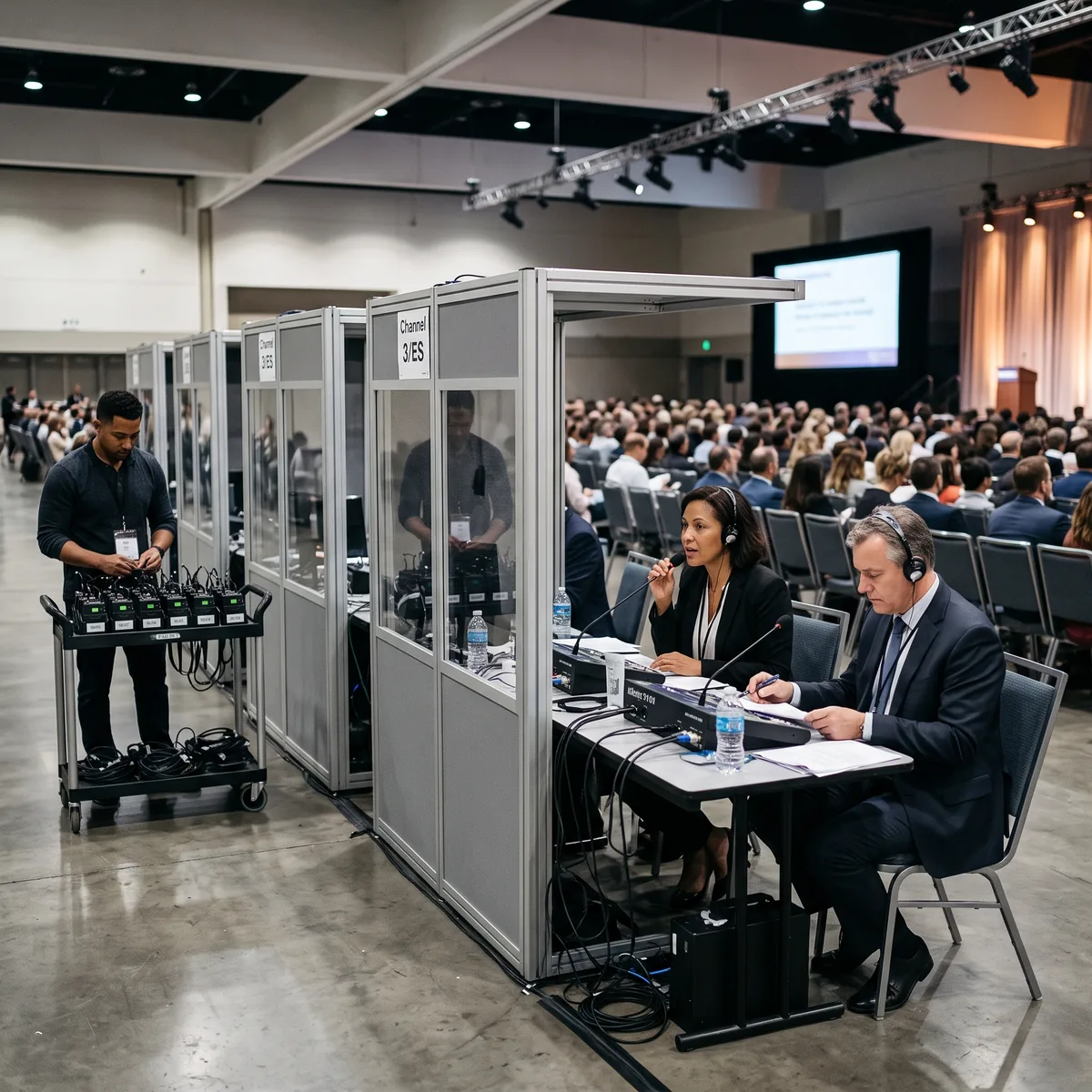
A keynote in Anaheim is forty minutes from starting. Three thousand attendees are filing into the hall. The event director walks to the back of the room to introduce herself to the simultaneous interpretation team and discovers the booth has two Spanish interpreters and one Mandarin interpreter for a program that is supposed to be staffed in Spanish, Mandarin, Korean, and Vietnamese. The booth is correctly built. The headsets are correctly distributed. The interpreters are credentialed. The conference is about to deliver in two languages instead of four, and nobody on stage will know until the post-event survey arrives.
This is how multilingual conferences usually fail. Not on the stage. In the booth. This guide covers how booth staffing works, what the numbers look like, and what needs to be confirmed before the room is built.
Conference interpreting is the part of the program audiences are most likely to remember and event organizers are least likely to scrutinize, until it goes wrong. The fix is procedural, and it happens weeks before the room is built.
Conference Interpreting Is a Different Skill
Conference interpreters work simultaneously, in soundproof booths, in language pairs, rotating roughly every thirty minutes because the cognitive load of simultaneous interpretation at conference pace is not sustainable for longer stretches. This is different from consecutive court interpreting, where an interpreter renders testimony one speaker at a time with pauses built into the proceeding. The skill sets overlap. The credentials, the working conditions, and the standards do not.
The International Association of Conference Interpreters sets the working norms most of the industry follows: a minimum of two interpreters per booth per language for any session over forty minutes, a third for full conference days, and a documented rotation schedule that protects accuracy across the program. The ISO 23155 conference interpreting services standard, ratified in 2022, formalized those norms internationally. Booths are governed by separate standards: ISO 2603 for permanent installations and ISO 4043 for mobile setups. Skipping any of these is not a cost savings. It is a quality decision the audience experiences whether or not the organizer intended it.
The Booth Math, Plainly
One language pair per booth. Spanish into English and English into Spanish is one booth. Adding Mandarin requires a second booth. Adding Korean requires a third. Each booth is physically separate so interpreters working different language pairs do not bleed into each other’s channels.
Two interpreters per booth, per language, per day. A single conference interpreter cannot sustain a full day alone. The thirty-minute rotation is what keeps accuracy stable across a six-hour program. A panel that runs four hours without relief will read differently in the second half, and it will show.
A third interpreter for long days or technical content. Biotech, securities, and medical sessions carry more cognitive load than general sessions. A three-interpreter booth is the working standard for a full-day program in those subject areas.
A two-language conference staffed correctly is two interpreters in one booth. A four-language conference is eight interpreters in four booths. The numbers compound quickly, which is why language count and session lengths need to be locked before equipment is ordered, not after.
Language Pair Sourcing by California Venue
Conference interpreter benches are deep in some California metros and shallow in others, and the booking pattern follows the venue.
Los Angeles events at the LA Convention Center, the Anaheim Convention Center, and the major downtown hotels lean Spanish, Mandarin, Korean, and Japanese. The conference interpreter bench for those four languages is the deepest in the state. Less common pairs, including Farsi, Armenian, and Vietnamese in conference register, draw from a much smaller pool and need to be confirmed sixty days out rather than two weeks out.
San Francisco Bay Area programs at the Moscone Center, the San Jose Convention Center, and the corporate campuses across the Peninsula lean Mandarin, Cantonese, Japanese, and Korean for technology and biotech content, with Spanish for medical-society and labor-policy summits. Cross-border investor events frequently add Portuguese and German.
San Diego at the convention center and the biotech corridor along Torrey Pines runs Spanish consistently for medical and life-sciences content, with Japanese and Mandarin for device and pharma international programs. Border-region work adds Spanish dialects that match the cross-border attendee mix.
Sacramento at the SAFE Credit Union Convention Center carries the policy, association, and government programs that draw statewide attendees, which usually means Spanish plus one or two languages that match the issue area: Hmong and Vietnamese for refugee and social-services convenings, Mandarin and Korean for trade and economic policy.
The right team for a program in San Jose is not necessarily the right team for the same program in San Diego. Booking in advance is what makes the placement possible.
Equipment, Technology, and the Hybrid Question
A simultaneous program needs a soundproof booth that meets ISO 2603 or ISO 4043 standards, a console for each interpreter, infrared or licensed-band RF transmission for audience receivers, and a clean audio feed from the stage. Hybrid programs add a remote simultaneous interpretation platform with a documented audio chain back to the in-room booth, because remote interpreters cannot work from a phone call. The technical specification is part of the procurement, not a logistics detail to sort out on load-in day.
What to Lock Down Sixty Days Out
Final language list. Each added language is a new booth and a new two or three-interpreter team. Late additions cost more and shrink the available bench.
Session count and session lengths. This drives interpreter count per booth and total interpreter days.
Subject matter, with materials. Conference interpreters prepare. Slide decks, glossaries, speaker bios, and any technical terminology submitted a week in advance is what separates a polished simultaneous program from a merely competent one.
Venue technical walkthrough. The booth location, sight line to the stage, audio feed source, and receiver distribution plan should be confirmed with the venue and the in-person interpreting team before load-in day.
Hybrid plan, if applicable. Remote simultaneous platform, in-room audio chain, and backup connectivity should all be documented in advance.
The Bottom Line
A multilingual conference is a procurement decision before it is a stage decision. The booth team, the language count, the equipment, and the lead time are what determine whether the audience hears a polished program or notices something is off and stops paying attention. Conference interpreting done correctly is invisible to the room. Done incorrectly, it is the thing the room remembers.
For simultaneous interpretation and conference interpreting services at California convention centers, corporate campuses, and hotel venues, planning starts with the language list and the session calendar. Contact us with the venue, dates, language pairs, session count, and subject matter. We will scope the booth team and equipment plan and confirm availability.
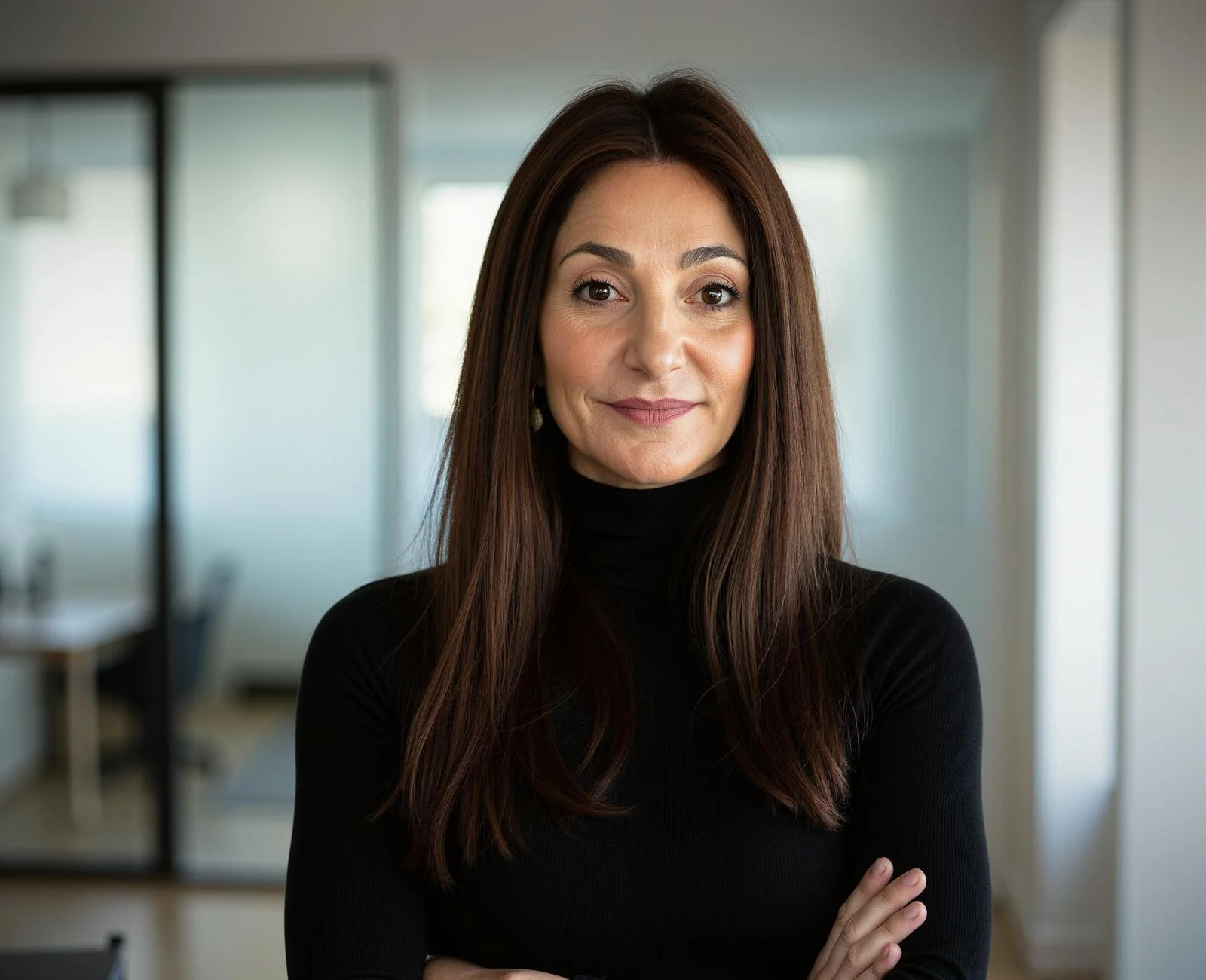
CEO & Founder
Born in Dallas, Texas, Alexandra grew up surrounded by Spanish, English, Arabic, and Italian. After moving to Venezuela, Spanish became her primary language. She holds a Master's in Healthcare Administration from Washington University in St. Louis and is a California court certified and medical interpreter.
She founded Kaplan Interpreting Services after seeing an industry that treated interpreters as interchangeable and clients as ticket numbers. She built a protocol-driven operation where every interpreter is hand-selected and credentialed for the specific setting, every client has a dedicated point of contact, and risk management is built into every assignment.
Her career reached a historic milestone when she interpreted the conversation between President-elect Biden and Pope Francis. That assignment, along with engagements for Nike and the Summit of the Americas, set the standard for every client engagement that followed.
"The same protocols that protected that historic conversation now protect every assignment we handle."