
Every Word Matters: Two Cases That Changed How I Think About Interpreters
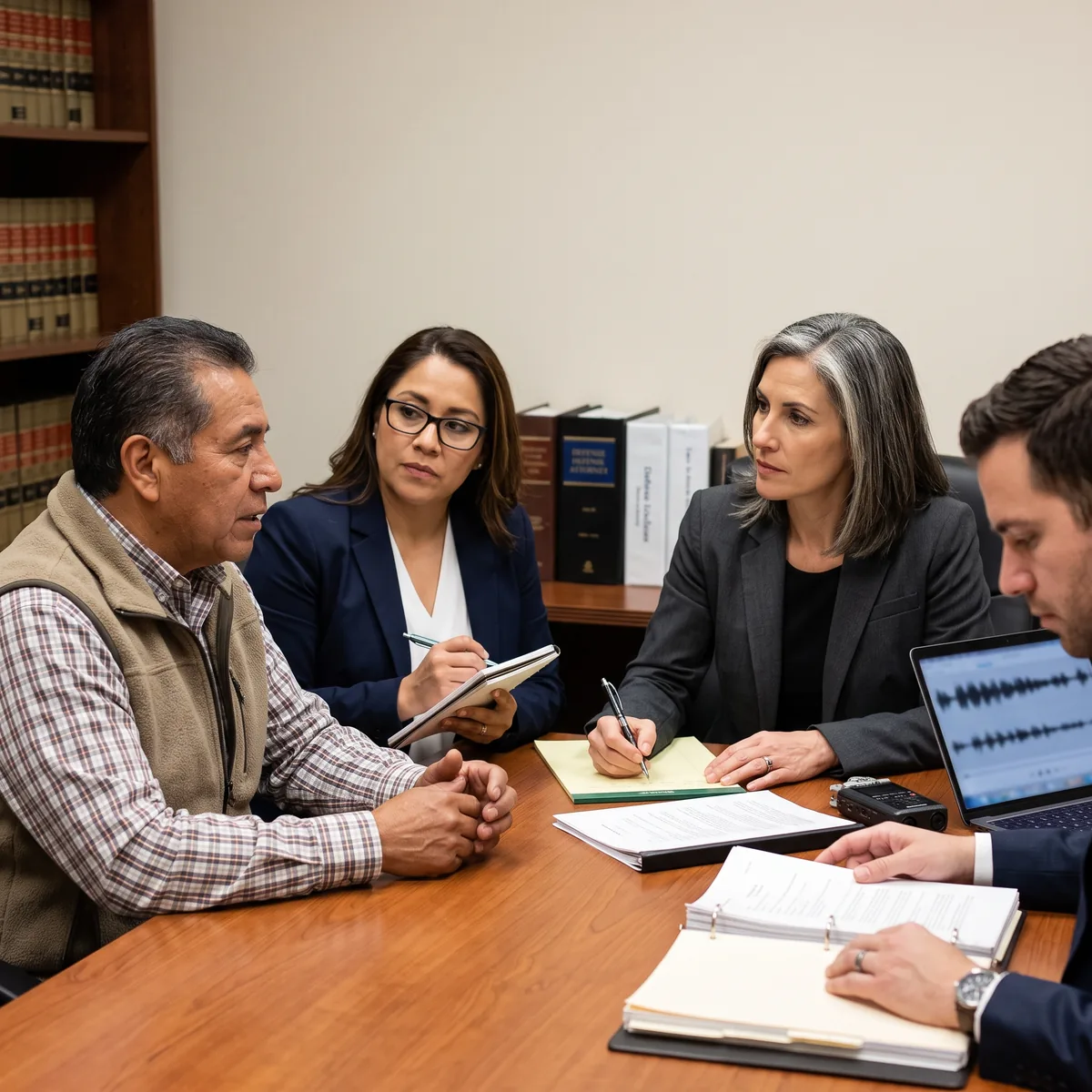
By Randy N. Kaplan, Deputy Public Defender, Los Angeles County
Criminal defense is a practice built on language. Words in statutes, words in police reports, words spoken under oath, and the spaces between them, where things get contested. Two cases I handled involving non-English-speaking clients drove that home in ways I didn’t anticipate, and both turned on something most people in the courtroom weren’t paying close enough attention to: the quality of interpretation.
Case One: A Caguama of Beer
My client was charged with Watson murder, a serious charge arising from a fatal DUI incident in California. Because he wasn’t arrested until several hours after the crash, there was no contemporaneous blood draw. The prosecution had to establish intoxication circumstantially, and the centerpiece of that effort was his own statements during interrogation.
He was a Spanish speaker. The interrogation had been conducted through an interpreter. And according to the official transcript, the version that would be read into the record, cited by the arresting officer on the stand, and handed to a jury, my client admitted to drinking twenty ounces of beer before getting behind the wheel.
I reviewed the transcript with my client and asked him whether that was what he said, whether that was what he meant. He said no.
I pulled the audio. He hadn’t said “twenty ounces.” He’d said a caguama.
Here’s the thing about caguama. It’s not a unit of measurement. In some Spanish-speaking communities, it’s used as slang for a large beer, somewhere around twenty ounces, and that’s apparently how the original interpreter understood it. But my client wasn’t from that community. Where he was from, caguama was a brand, and it came in eight-ounce bottles. To translate it correctly, you wouldn’t just need to know Spanish. You’d need to know his Spanish, his region, his dialect, the way that particular word landed in that particular culture. The interpreter had gotten it wrong not out of carelessness, but because that kind of knowledge runs deeper than fluency. And in a murder case, the difference between eight ounces and twenty is not a rounding error.
I retained Kaplan Interpreting Services to bring in an expert, someone with not just language fluency, but deep knowledge of regional dialect, cultural usage, and the specific background of my client. That expert was able to testify to exactly what “caguama” meant in my client’s community, challenge the official transcript, and introduce genuine reasonable doubt about the quantity of alcohol he consumed.
A word that looked like a number turned out to carry an entire regional and cultural context. And none of that would have surfaced without an interpreter who knew the difference.
Case Two: Wobbling vs. Weaving
The second case involved a Mandarin-speaking client charged with DUI. His BAC was .08, at the legal limit. In California, you can still be convicted even at .08 if the prosecution can show you were driving in an unsafe manner, so how he was actually driving mattered.
The officer testified that my client’s vehicle had been weaving. My client’s position was that his car had a mechanical issue, an axle problem that was causing the vehicle to wobble.
Weaving versus wobbling. In English those words carry very different implications. Weaving suggests an impaired driver; wobbling suggests a car with a problem. The jury would understand that distinction. But this case had a passenger, a Mandarin speaker, who had witnessed the whole thing, and she was going to testify about what the vehicle was doing. Whatever word she used in Mandarin, it was going to come out of the interpreter’s mouth in English as either one or the other.
I held my breath.
The interpreter rendered her words as wobbling.
It was exactly what we needed. But what struck me beyond the word itself was how it was delivered. The interpreter spoke with a composed, precise British accent, and I could see the effect it had. The witness’s credibility landed differently than it might have otherwise. She was speaking through a voice that sounded measured and authoritative, and I think the jury responded to that. It was a reminder that the interpreter isn’t just relaying content. They’re also, whether anyone acknowledges it or not, shaping how a witness comes across.
The Bottom Line
In criminal proceedings, interpretation isn’t a formality. It’s part of the evidence. What gets recorded, what gets testified to, what the jury hears, all of it passes through the interpreter. The difference between a competent interpreter and the right interpreter, one who brings cultural knowledge, regional fluency, and professional presence to the work, can have real consequences for real people.
These two cases made that concrete for me. I don’t take interpretation for granted anymore. And if you’re handling cases with non-English-speaking clients or witnesses, you shouldn’t either.
About the author
Randy N. Kaplan is a Deputy Public Defender in Los Angeles County. He has spent twenty-three years defending people who cannot afford to choose their own attorney, and over those years he has stood in the courtroom beside more clients than he can count, many of whom relied on an interpreter simply to be heard. The two cases here are not the most consequential of his career. They are the two that made him stop treating interpretation as background.
Kaplan Interpreting Services occasionally publishes first-person accounts from attorneys whose work intersects with language access. If you have a case that turned on the language a witness or client actually speaks, contact us.