
When AI Walks Into the Courtroom: Ohio's Proposed Rules Draw a Clear Line
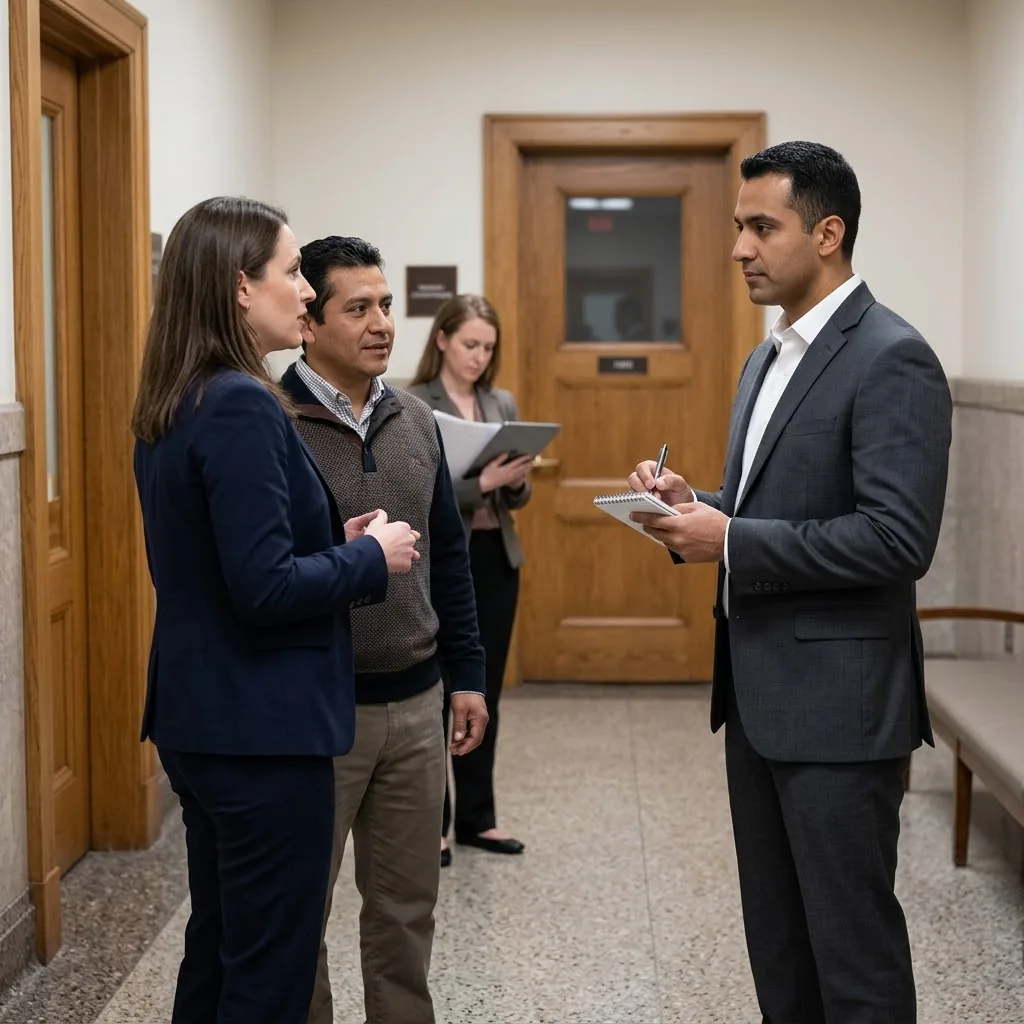
The Ohio Supreme Court is weighing a proposal that would allow generative artificial intelligence to assist with certain language services in Ohio courts. It sounds like a step forward for access. The fine print, though, tells a more complicated story and the distinctions being drawn in Columbus have implications for courts and legal professionals well beyond Ohio.
The proposal, put forward by the court’s Commission on the Rules of Superintendence and the Advisory Committee on Language Services, was developed in response to a genuine and documented shortage of qualified interpreters. Ohio certifies roughly 250 court interpreters statewide, and for some languages, that number drops to one or two. Only four interpreters are certified in Haitian Creole, a language in growing demand as that population has expanded in Ohio, and all four are based out of state. When a Haitian Creole speaker appears before a court in Columbus or Cleveland, the logistics alone can delay proceedings and compromise access to counsel.
The shortage is real. So is the temptation to fill gaps with technology. What makes Ohio’s proposal worth paying attention to is not that it embraces AI, it is how carefully it tries to limit where AI can go.
What the Proposal Actually Says
Under the proposed rules, generative AI would be permitted for what the court calls basic “translation” of general information: court websites, signage, office hours, chatbot responses, and similar non-legal materials. That use would have to be disclosed. Beyond that, the rules draw a hard boundary.
AI would be prohibited from interpreting any court proceeding or function where a person’s rights are at stake. It could not be used for legal forms, substantive legal writing, or anything that touches on a litigant’s constitutional or civil rights. The court’s own commentary on the proposal doesn’t soften that position: “The use of artificial intelligence oral interpretation is subject to error, misrepresentation, breach of privacy, and may cause harm to the individual who receives the information in the foreign language.” The proposal goes further, warning that AI-generated output “may jeopardize the litigant’s constitutional or civil rights.”
That language is notable coming from the same body proposing the rule. Courts don’t typically write self-criticism into their own regulatory commentary. The fact that Ohio’s court system felt it necessary to include those warnings reflects how seriously the legal community is taking the accuracy and accountability questions that AI interpretation raises.
The Distinction Between Translation and Interpretation
Embedded in Ohio’s proposal is a distinction that people outside the language services field often miss: translation and interpretation are not the same thing, and the difference matters a great deal in legal settings.
Document translation, converting written text from one language to another, is a discrete, reviewable task. A translated document can be checked, corrected, and certified. Certified legal translation carries a professional’s signature and accountability. Errors can be caught before a document reaches a court or a client.
Legal interpretation, by contrast, happens in real time. A court certified interpreter working a deposition or a hearing is processing speech, rendering it in another language within seconds, and doing so in a context where every word may become part of the official record. There is no second draft. The interpreter’s judgment about register, about ambiguous phrasing, about when to ask for clarification is part of the service. That judgment is exactly what AI cannot replicate, which is why Ohio’s proposal would keep legal interpreting services firmly in human hands even as it opens a narrow door for technology in lower-stakes settings.
A Problem Technology Alone Won’t Solve
The interpreter shortage Ohio is grappling with is not unique to Ohio. Courts across the country face similar gaps, particularly for languages with smaller certified interpreter pools. The response in many jurisdictions has been to expand the use of virtual interpretation, connecting courts with qualified professional interpreters remotely, regardless of geography. That model has expanded access meaningfully without sacrificing the human accountability that legal proceedings require.
Ohio’s proposal actually moves in a similar direction on the credentialing side, separately proposing to make three-year language certifications permanent, allow semi-certified interpreters to handle minor cases, and accept out-of-state certifications. Those changes, not the AI provisions, may do more to address the actual shortage. A certified Haitian Creole interpreter located in another state is still a trained professional with recognized credentials. AI is not.
The broader question the Ohio debate is surfacing is one that courts, attorneys, and interpretation and translation agencies are all beginning to reckon with: as AI tools become more capable, where exactly does the line sit between what technology can assist with and what requires a qualified human? Ohio’s answer, at least for now, is that the line sits at rights. Anything that could affect a litigant’s constitutional or civil standing stays with certified interpreters.
What This Means for Legal Professionals
Attorneys working with non-English-speaking clients should pay attention to how this debate develops, not because AI is about to replace interpreters in courtrooms, but because the pressure to use it will continue as interpreter shortages persist. Understanding the difference between what a technology tool can and cannot do in a legal setting is increasingly part of competent representation.
For a deposition, a suppression hearing, an immigration proceeding, or any matter where the record matters, legal interpretation requires a trained professional, ideally one who is court certified and familiar with the specific area of law involved. In-person interpretation remains the standard for complex or high-stakes proceedings. Simultaneous interpretation is available for multi-party or multi-language situations that demand real-time rendering. These are not interchangeable with a chatbot, regardless of how sophisticated the underlying model becomes.
Certified legal translation of documents, contracts, court orders, immigration filings, foreign-language evidence, carries the same accountability requirement. A document translation produced by an AI tool, however fluent it appears, does not carry professional certification, cannot be held to a standard of accuracy, and may not be admissible.
Ohio’s proposed rules are still open for public comment. But the framework they’re proposing, technology for the peripheral, humans for the substantive, reflects where the legal profession broadly seems to be landing. For now, that’s a reasonable place to draw the line.

CEO & Founder
Born in Dallas, Texas, Alexandra grew up surrounded by Spanish, English, Arabic, and Italian. After moving to Venezuela, Spanish became her primary language. She holds a Master's in Healthcare Administration from Washington University in St. Louis and is a California court certified and medical interpreter.
She founded Kaplan Interpreting Services after seeing an industry that treated interpreters as interchangeable and clients as ticket numbers. She built a protocol-driven operation where every interpreter is hand-selected and credentialed for the specific setting, every client has a dedicated point of contact, and risk management is built into every assignment.
Her career reached a historic milestone when she interpreted the conversation between President-elect Biden and Pope Francis. That assignment, along with engagements for Nike and the Summit of the Americas, set the standard for every client engagement that followed.
"The same protocols that protected that historic conversation now protect every assignment we handle."